
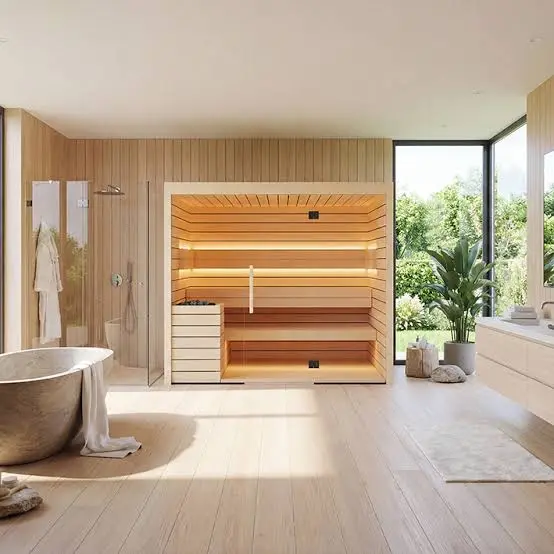
Over the past few years, our team has tested dozens of wellness solutions, ranging from lightweight setups to high-end custom installations. Today, bringing the thermal ritual into everyday living is no longer a luxury reserved for commercial spas; it has become an essential pillar of recovery, stress management, and physical health.
If you have been browsing options for an at home sauna, an in home sauna, or searching for the best home sauna available today, you have likely come across Auroom Wellness. Handcrafted in Estonia using thermally modified timber, Auroom saunas have rapidly emerged as a favorite among design enthusiasts, wellness purists, and biohackers.
In this comprehensive review, we dive deep into Auroom Wellness. We examine their history, model lineup, installation mechanics, energy costs, and real-world performance, while comparing them against popular retail alternatives like a home depot sauna or a home sauna costco unit.
The History and Rise of Auroom Wellness
To understand why Auroom stands out in the crowded market of home saunas, you have to look at its roots. Founded in Estonia—a Baltic nation where sauna culture is recognized by UNESCO and deeply woven into daily life—Auroom was spun off from Thermory AS, the world leader in thermally modified wood production.
Historically, many options for an indoor sauna for home use or an outdoor home sauna relied on heavy, chemical-treated lumber or cheap plywood kits that warped under intense heat. Auroom revolutionized this space by combining centuries-old Nordic heat practices with modern thermal modification.
By treating timber with only heat and steam at temperatures exceeding 200°C (392°F), the cellular structure of the wood is permanently altered. The result is Thermo-Aspen and Thermo-Spruce—materials that resist warping, repulse moisture, retain zero harsh chemicals, and emit a subtle, soothing aroma every time you turn on the heater.
This structural stability allowed Auroom to introduce modern architectural elements—such as floor-to-ceiling panoramic glass walls—without compromising insulation or thermal integrity.
Why Is Auroom So Successful?
When we surveyed the market for the best at home sauna and best home infrared sauna options, we noted several key factors driving Auroom’s widespread adoption:
- Uncompromising Aesthetics: Unlike standard boxy kits, Auroom structures feel like high-end architectural interventions. The frameless glass fronts, hidden LED mood lighting, and rich amber wood tones instantly transform a master bath or backyard patio.
- Modular Versatility: Whether you are searching for a compact dry sauna for home spaces, a dedicated infrared home sauna, or a heavy-duty outdoor home sauna, Auroom’s product catalog spans both traditional electric heaters (Harvia, HUUM) and specialized infrared technology.
- Precision Engineering: Panels are pre-machined to exacting tolerances. Everything fits together securely, avoiding the drafty gaps common in budget DIY solutions.
How to Use an Auroom Sauna for Maximum Benefits
Using an at home infrared sauna or a home dry sauna correctly ensures you maximize cardiovascular, detoxification, and relaxation benefits.
- Pre-Hydrate: Drink 16–24 oz of water before stepping inside.
- Preheat the Cabin:
- For an infrared sauna for home use (like the Auroom Irradia), preheating takes roughly 15 to 20 minutes to reach optimal radiant temperatures (120°F–140°F).
- For a home dry sauna utilizing a traditional heater (like the Auroom Cala or Baia), allow 30 to 45 minutes for the cabin to reach 160°F–195°F.
- Set the Ambiance: Use the integrated controller (such as a HUUM UKU Wi-Fi control) to set your desired temperature and adjust the indirect under-bench LED lighting.
- The Session:
- Dry Heat: Spend 15 to 25 minutes inside.
- Loyly (Steam): For traditional models, pour small ladles of water over the heated rocks to release gentle bursts of humidity.
- Cool Down: Step out and take a cool shower or plunge, then rest for 10–15 minutes before repeating if desired.
Practical Applications: Everyday Home Uses
Integrating a sauna home setup into daily routines offers versatile lifestyle benefits:
- Post-Workout Recovery: Heat therapy increases growth hormone secretion, reduces delayed-onset muscle soreness (DOMS), and flushes metabolic waste.
- Stress Management & Sleep: A 20-minute evening session elevates core body temperature; as your body cools down afterward, it signals melatonin release, deepening deep-wave sleep.
- Work-From-Home Reset: A midday session breaks up screen time, lowers cortisol, and restores mental clarity.
- Social & Family Wellness: Models like the Auroom Libera or Arti comfortably seat 4 to 6 people, making the sauna a screen-free gathering space.
Pricing, Electricity, and Installation Requirements
Price Breakdown
Auroom saunas sit in the premium tier of home wellness equipment. While you can purchase a basic home sauna costco or home depot sauna unit for $2,500 – $5,000, Auroom cabins range from entry-level luxury to high-end architectural builds:
- Compact Indoor Cabins (Cala, Lumina): ~$7,000 – $12,000
- Mid-to-Large Indoor Cabins (Baia, Nativa, Irradia): ~$12,000 – $21,000
- Outdoor Cabin Structures (Mira, Arti, Terra): ~$21,000 – $55,000+
Electricity Consumption
A common concern when buying a sauna for home use is the impact on monthly utility bills.
- Infrared Models (e.g., Irradia): Typically draw 1.5 kW to 2.5 kW on standard or 220V circuits. Running a 30-minute session costs approximately $0.20 to $0.50 depending on local electrical rates.
- Traditional Electric Models (e.g., Cala, Baia): Use 4.5 kW to 9.0 kW heaters requiring a dedicated 240V / 30-50A hardwired circuit. A typical 1-hour cycle (preheat + session) consumes ~6 kWh, costing around $0.90 to $1.80 per run.
Compared to maintaining a hot tub or a large home steam room, a dry wooden cabin is significantly more energy efficient because it is only powered when actively in use.
Technical Comparison: Auroom vs. Market Competitors
To make it easy to evaluate options on mobile devices, we have compiled a technical comparison table.
(Mobile users: Click here for full-screen responsive HTML view)
| Model / Feature | Auroom Cala / Irradia | Costco / Big-Box Prefab | Custom Built DIY | Sunlighten / Clearlight |
| Category | Premium Indoor Traditional / IR | Value Prefab Box | DIY Home Sauna | Dedicated IR Cabinet |
| Primary Wood | Thermo-Aspen / Thermo-Spruce | Untreated Hemlock / Pine | User Selected | Cedar / Basswood |
| Heating Tech | Harvia/HUUM Electric or High-End IR | Basic Far-Infrared Carbon | Electric / Wood Stove | Carbon / Ceramic IR |
| Structural Integrity | Exceptional (Non-warping Thermo wood) | Fair (Prone to expanding/gapping) | Depends on Builder | Good |
| Glass Quality | 8mm Tempered Safety Glass Facade | 5mm Standard Tempered | Custom Ordered | 6-8mm Tempered |
| Assembly Time | 4 – 6 Hours (2 Adults) | 2 – 3 Hours | 40+ Hours | 2 – 4 Hours |
| Price Bracket | $7,000 – $15,000+ | $2,500 – $4,500 | $4,000 – $10,000 | $6,000 – $12,000 |
What to Use for Home Dry Sauna Construction & Outfitting
If you are planning a diy home sauna or outfitting a ready-made kit, material selection is crucial:
- Wood Selection: Use Thermo-Aspen, Thermo-Alder, or Western Red Cedar. Avoid untreated softwoods or standard pine, which leak sap, splinter under high temperatures, and warp when exposed to humidity.
- Heater Unit: Pair the cabin with a reliable European heater such as a Harvia, HUUM, or Saunum unit.
- Flooring: Duckboard wooden mats over tile, concrete, or non-porous surfaces allow easy cleaning and proper drainage.
- Vapor Barrier & Insulation: Essential for DIY builds to prevent mold inside wall cavities and retain heat efficiency.
The Social Media Perspective: What Reddit Users Say
To get an unbiased look, our team spent hours analyzing discussions across fitness, biohacking, and home improvement subreddits (such as r/Sauna and r/HomeImprovement). Here is what real users highlight regarding infrared sauna at home setups and Auroom products:
- Build Quality vs. Budget Brands: Reddit users frequently complain about budget “plug-and-play” saunas purchased from big-box stores, citing thin walls, off-gassing glue smells, and drafty doors. In contrast, Auroom receives high praise for its dense Thermo-Aspen construction and zero-chemical footprint.
- The “Infrared vs. Traditional” Debate: The community often notes that while portable pop-up tents or cheap portable home sauna options provide quick sweating, they lack the high-heat thermal mass of a real timber cabin. Auroom’s infrared home sauna line (like the Irradia) earns compliments for achieving rich heat distribution without feeling cheap or plastic.
- Aesthetics Matter: Numerous posters in r/HomeGym and r/InteriorDesign point out that homes with saunas or a home with sauna features add significant property appeal when the unit looks custom-designed rather than like an eyesore cabinet.
Our Team’s Perspective After Testing
After spending weeks testing the Auroom Cala Glass and spending time in their outdoor cabin setups, our team came away genuinely impressed.
The difference between a mass-produced prefab unit and an Auroom cabin is noticeable from the moment you open the crate. The scent of thermally modified aspen is rich and organic, without any synthetic odor. Heat retention is rock solid, and the frameless glass doors open and close with a satisfying, high-end feel.
For anyone searching for the best sauna for home installation who wants a balance of authentic Baltic heat performance, modern aesthetics, and straightforward assembly, we believe Auroom Wellness sets a benchmark in the premium category.
Frequently Asked Questions (FAQ)
Can I install a steam and sauna for home no plumbing required?
Yes! Traditional dry saunas do not require intake or drainage plumbing. Moisture is created manually by pouring small amounts of water over heated rocks, which evaporates completely.
What is the difference between home saunas and steam rooms?
A home dry sauna uses dry heat (typically 160°F–200°F with low humidity), while a home steam room operates at lower temperatures (110°F–120°F) with 100% humidity, requiring sloped ceilings, waterproof tile, and dedicated plumbing.
Is an outdoor home sauna better than an indoor model?
It depends on available space. An indoor sauna for home provides convenient year-round access in bathrooms, basements, or spare rooms. An outdoor home sauna creates a dedicated backyard retreat but requires weather-resistant exterior cladding and a solid foundation (such as a concrete pad).
How does a portable home sauna compare to an Auroom cabin?
A portable home sauna (like a fold-up thermal tent) is low-cost and easy to move, but it lacks structural durability, aesthetic appeal, and the deep thermal mass of a permanent wood cabin.
Final Verdict
If you are ready to invest in your long-term health and turn your living space into a private spa, Auroom Wellness delivers world-class craftsmanship, sustainable materials, and striking modern design. Whether you choose a compact infrared sauna for home use or a grand outdoor traditional cabin, Auroom stands out as one of the finest options on the market today.