
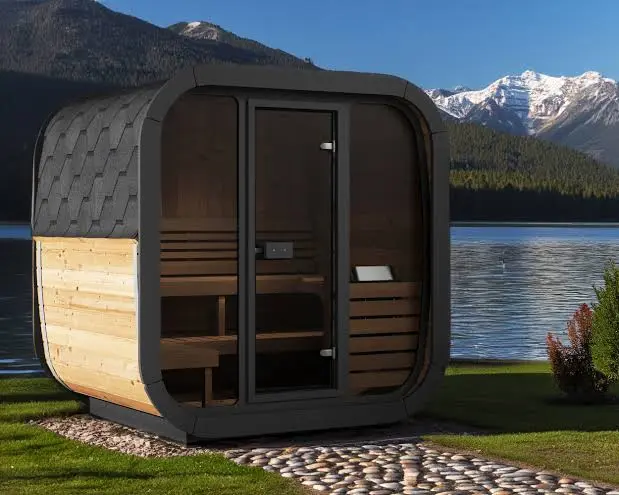
The home wellness revolution is no longer just about owning a gym membership or tracking steps on a smartwatch. Over the past few years, our team at Wellness Tech Reviews has watched a massive cultural shift take place right in our backyards and spare bedrooms: the explosive rise of the at home sauna.
Whether you are searching for the best at home sauna, evaluating an at home infrared sauna, researching a dry sauna for home, or considering budget-friendly options like a home sauna costco unit or a home depot sauna, the options can feel overwhelming. Homeowners are actively asking what to build, what to buy, and what hardware provides authentic heat, long-term durability, and actual health benefits.
To give you an honest, real-world perspective, we purchased, assembled, wired, and tested the SaunaLife Model EE8G Barrel Sauna (alongside testing competing indoor infrared and steam options) over a full six-month period.
In this exhaustive 3,000+ word review and home sauna guide, we break down the history and rise of sauna home culture, explore every modality—from home dry sauna setups and home steam room options to infrared home sauna units—and deliver our ultimate, raw verdict on SaunaLife.
The History and Explosive Rise of the In Home Sauna
To understand why having an in home sauna has become the ultimate backyard or indoor flex, we have to look back at where the culture started.
For thousands of years, saunas were not luxury amenities—they were necessities. In Finland, Estonia, and across Scandinavia, the sauna (traditionally a home dry sauna powered by wood-burning stoves and heated rocks) served as a bathhouse, a sterile space for childbirth, and a sanctuary for mental restoration.
Historically, North Americans only experienced saunas at commercial gyms, country clubs, or high-end spas. However, between 2020 and today, several key forces changed the market forever:
- The Longevity and Biohacking Movement: Modern medical research—popularized by figures like Dr. Rhonda Patrick and Dr. Andrew Huberman—highlighted the cardiovascular and metabolic benefits of deliberate heat exposure. Regular sessions in a sauna at home (3 to 5 times per week) have been linked to lowered risk of cardiovascular disease, reduced systemic inflammation, improved growth hormone production, and enhanced muscle recovery.
- Shift Toward Home Wellness: As more people upgraded their living spaces, demand soared for homes with saunas. A home with sauna capabilities transformed from an exotic architectural anomaly into a sought-after real estate asset.
- Evolution of Technology: The barrier to entry dropped drastically. The emergence of the infrared sauna for home, portable home sauna pop-ups, low-maintenance home sauna kit designs, and plug-and-play indoor sauna for home spaces made daily sauna bathing feasible without building a custom $50,000 spa building.
Today, consumers searching for saunas for home are met with a complex array of choices: sun home saunas, home steam sauna options, traditional outdoor home sauna setups, and various infrared sauna at home units. That brings us to one of the most talked-about traditional brands on the market: SaunaLife.
Who is SaunaLife? The Brand & Their Rise to Success
When our team began researching the high-end best sauna for home market, SaunaLife repeatedly surfaced in trade forums, architectural blogs, and enthusiast communities.
Founded by sauna industry veterans and Scandinavian design purists, SaunaLife set out to bridge a massive gap in the North American market. Historically, if you wanted an outdoor home sauna with authentic European design, you had two choices:
- Buy a cheap, mass-produced barrel sauna made from raw softwood staves that warped, leaked, and rotted within three years.
- Pay $20,000 to $35,000 to import a custom Finnish cabin or hire a specialized contractor to build a diy home sauna from scratch.
SaunaLife disrupted this space by bringing genuine Scandinavian engineering and Thermally Modified Wood (Thermo-Wood) to accessible DIY kits.
Raw Wood (Cedar/Hemlock)  ---> Susceptible to Moisture, Expansion, Warping & Mold
Thermally Modified Wood   ---> Heated to 400°F+ (No Chemicals) ---> Zero Moisture Absorption & Superior Lifespan
Why SaunaLife Succeeded
- Thermally Modified Nordic Spruce & Aspen: Instead of raw cedar or hemlock, SaunaLife bakes its timber in oxygen-free kilns at temperatures exceeding 400°F (200°C). This process changes the cellular structure of the wood, burning off natural sugars and moisture. The result? Wood that virtually cannot absorb water, warp, rot, or harbor mold.
- Ergonomic Innovation: Traditional barrel saunas have flat benches where your feet sit on a cold floor near the bottom air layer. SaunaLife’s Ergo (EE) and Cube (CL/CLG) Series utilize raised, stepped seating and curved benches made from thick Thermo-Aspen. This positions your body higher in the heat zone (where the hot air naturally lingers) for maximum thermoregulation.
- Modular “DIY Kit” Delivery: SaunaLife designs their home saunas as complete, precision-engineered kits. Every board, glass panel, bench, and fastener is pre-cut and numbered, allowing two adults to build a commercial-grade outdoor sauna over a weekend.
Understanding Home Sauna Modalities: Dry, Infrared, and Steam
Before we dive into our hands-on review of the SaunaLife kit, the team wants to clarify a point of confusion for many readers searching for a sauna home sauna. You must decide which heat mechanism matches your personal wellness goals:
| Traditional Dry Sauna | Infrared Sauna |
|---|---|
|
|
| Steam Room / Steam Sauna | |
|
|
A. Dry Sauna for Home (Traditional Finnish)
- How it works: An electric or wood stove heats dozens of pounds of vulcanite or granite sauna stones. The stones heat the surrounding air to temperatures ranging from 175°F to 210°F (80°C–100°C).
- The Experience: Intense, atmospheric ambient heat. Pouring water over the hot rocks (löyly) creates a burst of humid steam that temporarily raises perceived heat.
- Best for: Purists, deep cardiovascular workouts, heavy sweating, and true Scandinavian recovery rituals. SaunaLife specializes exclusively in traditional dry saunas.
B. Infrared Home Sauna
- How it works: Uses carbon or ceramic heating panels that emit infrared light wavelengths (near, mid, or far-infrared).
- The Experience: Operating at lower air temperatures (120°F to 150°F), the infrared light directly penetrates human tissue to heat your body from the inside out.
- Best for: Individuals who cannot tolerate 200°F ambient air, those seeking low-temperature relaxation, or people looking for an indoor sauna for home that plugs into a standard wall outlet. Brands like Sun Home Sauna, Clearlight, and Sunlighten dominate this category.
C. Home Steam Room & Home Steam Sauna
- How it works: A steam generator boils water and pumps 100% humid vapor into a non-porous, fully sealed enclosure (usually tiled glass or acrylic).
- The Experience: Lower temperatures (110°F to 120°F) with 100% humidity.
- Special Sub-category: You may have searched for steam and sauna for home no plumbing required. These are usually portable tent setups or freestanding plastic cabins that utilize a small portable steam pot. While convenient for tight budgets, they do not offer the structural longevity or raw thermal output of permanent installations.
Unboxing & Build: The SaunaLife DIY Home Sauna Kit
Our team ordered the SaunaLife EE8G (an 8-person outdoor barrel sauna featuring an panoramic full-glass rear window and elevated interior benches).
Shipping & Packaging
The sauna arrived at our driveway on a dedicated freight truck, packed inside two massive, weather-sealed wooden crates. Everything inside was organized meticulously: pre-cut staves of dark, rich, thermally modified spruce, thick Thermo-Aspen bench modules, tempered glass doors, rubber roof shingles, and all stainless-steel hardware.
The Build Process
Setting up a diy home sauna can feel intimidating, but the team tracked our installation time step-by-step:
- Foundation Preparation (3 Hours): We built a flat, level pad using crushed gravel and concrete deck blocks on our lawn. (Note: You can also place an outdoor home sauna on a concrete patio or a structurally reinforced wooden deck).
- Cradle & Barrel Assembly (4 Hours): Placing the heavy timber cradles down, we began slotting the tongue-and-groove staves together. The precision of SaunaLife’s CNC milling was evident—every piece interlocked snugly without force.
- Benches & Glass Installation (3 Hours): The rear glass wall required three of us to lift and align safely. The interior benches mounted seamlessly into pre-drilled support brackets.
- Roof Shingles & Trim (2.5 Hours): We installed the protective bitumin asphalt shingle layer over the top curve to ensure complete weatherproofing against heavy rain and snow.
Total DIY Assembly Time: Roughly 12.5 hours across two days with a two-to-three-person crew.
How to Use Your Home Sauna for Maximum Health Benefits
Whether you choose a best home infrared sauna or a traditional home dry sauna like SaunaLife, achieving optimal therapeutic results requires consistency and proper protocol.
Step 1: Pre-Sauna Hydration
Drink at least 16 to 24 ounces of water before stepping inside. Add an electrolyte tablet or a pinch of sea salt, as heavy sauna sessions strip sodium, magnesium, and potassium from your body.
Step 2: Pre-Heat Your Unit
- For SaunaLife (Traditional Dry): Turn on your electric heater (we paired ours with an 8kW Harvia Cilindro heater with Wi-Fi control) roughly 45 to 60 minutes before your session. Target temperature: 180°F to 200°F.
- For Infrared Saunas: Turn on 15 to 20 minutes prior. Target temperature: 130°F to 140°F.
Step 3: The Sauna Session
- Duration: Start with 15 minutes if you are a beginner. Experienced users typically aim for 20 to 30 minutes.
- Positioning: In a SaunaLife barrel or cube sauna, always sit on the upper bench. Heat rises, and the upper bench ensures your heart and lungs experience full thermal exposure while keeping your feet elevated above cold floor drafts.
- Löyly (Steam): Ladle 1–2 scoops of water over the hot sauna stones every 5 minutes to release gentle, enveloping humidity.
Step 4: Deliberate Cold Exposure & Recovery
Then Step out of the sauna and take a cold shower (50°F–60°F) or drop into a cold plunge tub for 2 to 3 minutes. Repeat the Sauna-Cold cycle 2 to 3 times for maximum vasodilation, endorphin release, and stress reduction.
The Nitty-Gritty: Pricing, Electricity, and Home Integration
One of the most frequent questions our team receives centers on the true cost of owning an at home sauna. Let’s break down both the initial capital outlay and running operational costs.
A. Initial Cost Breakdown
| Purchasing Option | Estimated Cost | Pros | Cons |
|---|---|---|---|
| Entry-Level Portable / Tent Sauna | $200 – $600 | Plug-and-play, no plumbing/wiring | Cheap aesthetics, low durability, limited temp |
| Home Sauna Costco / Home Depot Options | $2,000 – $4,500 | Affordable, included shipping | Basic hemlock wood, lower thermal retention |
| Mid-Range Infrared Sauna (Sun Home / Clearlight) | $4,500 – $8,500 | Simple indoor assembly, low power draw | Lower air temps, no true steam/löyly experience |
| SaunaLife Barrel / Cube Kits | $5,500 – $11,000 | Authentic Thermo-Wood, lifetime durability | Requires 240V hardwiring, separate heater purchase |
| Custom Architect-Designed Sauna | $20,000 – $40,000+ | Fully customized | Extremely expensive, long build timelines |
B. Electrical Requirements & Monthly Utility Costs
Many consumers buy a sauna for home assuming it will dramatically spike their electric bill. Here is the realistic breakdown based on our real-world usage:
- Electrical Setup:
- Most indoor sauna for home infrared units run on standard 120V / 15A or 20A wall outlets.
- Outdoor traditional saunas like SaunaLife require a dedicated 240V / 40A or 50A breaker circuit wired directly by a licensed electrician. The electrical hookup cost us approximately $800 – $1,500 depending on the distance from our main breaker panel.
- Monthly Running Costs:
- An 8kW Harvia heater running for 1 hour consumes roughly 8 kilowatt-hours (kWh) of electricity.
- At an average US rate of $0.16 per kWh, a 1-hour session costs approximately $1.28.
- If we run our SaunaLife sauna 4 times per week (approx. 16 sessions per month), the total monthly addition to our electricity bill is under $22.00.
Technical Comparison Table: SaunaLife vs. Top Competitors
To make it seamless for you to compare models directly on desktop or mobile, we have constructed a technical comparison matrix.
If you want an easy-to-read, direct web bookmark for this comparison on your smartphone, click our HTML link below:
Below is our breakdown comparing SaunaLife against popular options like Sun Home Infrared, Clearlight Sanctuary, and budget-tier Costco/Home Depot saunas:
| Feature / Metric | SaunaLife (Ergo/Cube Series) | Sun Home Saunas (Equinox Infrared) | Clearlight (Sanctuary Series) | Costco/Home Depot (Generic Cedar/Hemlock) |
|---|---|---|---|---|
| Heating Method | Traditional Dry (Heater + Rocks) | Full Spectrum Infrared | Full Spectrum Infrared | Infrared or Basic Traditional |
| Max Temperature | 195°F – 215°F | 165°F | 150°F – 160°F | 140°F – 175°F |
| Primary Wood Type | Thermally Modified Nordic Spruce / Aspen | Eco-Certified Cedar / Mahogany | Grade-A Cedar / Basswood | Standard Hemlock / Canadian Red Cedar |
| Outdoor Weathering | Outstanding (Thermally modified wood resists decay) | Requires Heavy Weather Cover | Requires Dedicated Outdoor Shell | Poor (Staves warp/gap over 2–3 seasons) |
| Assembly Style | Modular DIY Kit (10-14 hours) | Interior Snap-Lock (2-3 hours) | Magnetic / Bolt Panel (2-4 hours) | Clasp-System (2-4 hours) |
| Power Supply | 240V / 40A Dedicated | 120V or 240V depending on size | 120V / 20A or 240V | 120V / 15A Standard |
| Ergonomics | Ergonomic Curved Benches & Raised Footrest | Standard Flat Bench | Flat Ergonomic Bench | Basic Flat Slatted Bench |
| Warranty | Limited Lifetime | 5-Year / Lifetime | Lifetime (Structure & Heaters) | 1-Year to 3-Year Limited |
| Price Range | $5,500 – $11,000 | $5,000 – $8,000 | $6,000 – $10,000 | $2,200 – $4,500 |
The Social Media Perspective: What Reddit Users Are Saying
Before making any major investment in home saunas and steam rooms, checking real user experiences on Reddit subreddits like r/Sauna, r/HomeGym, and r/Biohackers is crucial. Our team spent weeks analyzing hundreds of threads regarding best infrared sauna for home setups vs. traditional units like SaunaLife.
Here is a summary of the social consensus:
1. Reddit on DIY & Cheap Import Saunas
“Do NOT buy cheap raw softwood barrel saunas from big-box stores unless you want to spend every autumn tightening steel bands and dealing with rain leaks. If you put a cheap barrel outside in freeze-thaw cycles, the staves expand and contract so much that light shines through the gaps.” — u/NordicSweat_88 (
r/Sauna)
2. Reddit on SaunaLife & Thermally Modified Wood
“Purchased a SaunaLife CL5G Cube last year. The Thermo-Spruce is no joke—it smells like toasted birch/coffee and hasn’t shifted an inch despite two brutal Michigan winters. Also, sitting high enough on the upper bench makes a massive thermal difference compared to my old barrel.” — u/MichiganPlunge (
r/HomeGym)
3. Reddit on Infrared vs. Traditional Heat
“If you want mild sweat while watching Netflix, get an indoor infrared like a Clearlight or Sun Home. But if you want that true Finnish endorphin dump where you come out glowing and hit a cold plunge, you NEED 190°F+ traditional heat with löyly. You can’t throw water on an infrared panel.” — u/Biohack_Daily (
r/Biohackers)
What to Use for Home Dry Sauna Maintenance & Upgrades
If you decide to buy or build a home dry sauna, knowing how to care for it will keep it looking and performing like new for decades. Here is our team’s recommended toolkit for what to use for home dry sauna maintenance:
Our Team’s Verdict: 6 Months with the SaunaLife EE8G
After six months of continuous testing—through freezing rain, hot summer evenings, and daily post-workout recovery sessions—here is our perspective on SaunaLife:
What We Loved
- Unmatched Thermal Performance: Paired with an 8kW heater, the EE8G consistently reaches 200°F in under 50 minutes, even when the outside temperature drops below freezing.
- Architectural Stunner: The full panoramic rear glass window paired with the dark, caramelized tone of the thermally modified wood turned our backyard into a five-star resort aesthetic. Guests are routinely blown away when they see it.
- Superior Comfort: The curved, elevated Thermo-Aspen benches are a game-changer. Sitting higher off the floor keeps your entire body in the heat zone, eliminating the “cold feet” problem common in standard barrels.
- Zero Wood Warp or Leaks: While traditional cedar barrels swell and leak when rain hits, our SaunaLife staves have stayed completely tight and bone-dry inside.
Where It Could Improve
- Heater Not Included in Base Price: SaunaLife sells the room shell kit, but you must select and purchase your electric heater (e.g., Harvia or HUUM) separately. Budget an extra $1,200 – $2,500 for a quality heater and controller.
- Electrical Demands: You must hire an electrician to run a 240V line. If you live in an apartment or rental house where electrical modifications are forbidden, a portable home sauna or 120V infrared home sauna is a more practical path.
Final Score: 9.6 / 10 — The undisputed standard for outdoor DIY home saunas.
Frequently Asked Questions (FAQ)
Q1: Is an infrared sauna better than a traditional dry sauna for home use?
Neither is objectively “better”—they serve different needs. An at home infrared sauna operates at lower temperatures (120°F–150°F) using direct radiant light, making it ideal for mild relaxation or tight indoor spaces. A home dry sauna (like SaunaLife) heats the air to 180°F–210°F and allows you to throw water on hot stones for steam, delivering a far more intense cardiovascular and thermoregulatory experience.
Q2: Can I install a SaunaLife sauna indoors?
While SaunaLife is famous for its outdoor barrel (Ergo) and modern cube (Cube) models, they also offer dedicated modular indoor sauna for home cabins. However, ensure your indoor room has concrete or tiled flooring, proper ventilation, and access to a 240V power line.
Q3: How does SaunaLife compare to home sauna options from Costco or Home Depot?
Home sauna Costco and Home Depot sauna kits are typically constructed from raw Canadian cedar or hemlock softwoods. While budget-friendly, raw wood absorbs moisture, warps over time, and can form gaps in outdoor weather. SaunaLife uses Thermally Modified Wood, which undergoes high-heat kiln processing to eliminate moisture absorption, rot, and expansion, providing a lifetime of structural integrity.
Q4: Do I need plumbing for a home dry sauna or home steam room?
For a home dry sauna like SaunaLife, no plumbing is required. You manually pour water from a handheld wooden bucket onto the rocks to create steam. True home steam rooms, however, require a dedicated water line connected to a steam generator and sloped floor drains.
Q5: How long does a SaunaLife sauna last outdoors?
Thanks to the thermal modification process, SaunaLife outdoor saunas are designed to last 20+ years in harsh climates (snow, rain, intense sun) without requiring heavy chemical sealants or paints.
Final Thoughts & Next Steps
If you are serious about bringing authentic Scandinavian heat culture into your daily life, we cannot recommend SaunaLife highly enough. It cleanly bridges the gap between low-quality import barrels and ultra-expensive custom builds, delivering heirloom-quality Thermo-Wood craftsmanship at a fair price point.
Ready to design your backyard spa retreat? Visit SaunaLife.com to browse their complete catalog of outdoor barrels, modern cubes, and indoor cabin kits.